
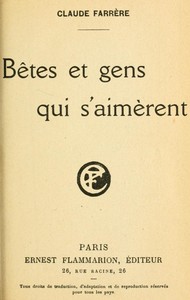
Bêtes et gens qui s'aimèrent by Claude Farrère
Claude Farrère's Bêtes et gens qui s'aimèrent isn't a single story, but a collection of them. Each one isolates a specific, powerful relationship between a person and an animal, and then turns up the heat to see what happens.
The Story
The book is a series of vignettes. In one, a lonely man's world shrinks to the orbit of his dog, creating a bond so exclusive it shuts out human society. Another follows a woman whose silent understanding with her cat becomes her only true companionship in a stifling life. There are stories of hunting, not as sport, but as a grim, intimate duel between man and beast. Farrère sets these intense pairings against various backdrops—from domestic parlors to the wilds of the colonies—but the focus is always the same: the electric, often unspoken, current that runs between two different kinds of consciousness.
Why You Should Read It
What grabbed me was how Farrère completely avoids sentimentality. He's not interested in 'man's best friend' clichés. Instead, he shows these relationships as they often are: complicated, selfish, healing, and sometimes damaging. The animals aren't magical helpers or moral guides; they are powerful presences that change the human characters, for better or worse. Reading it, you start to see these stories as mirrors for all kinds of love—how it can trap us, save us, or define us. The writing is clean and direct, which makes the emotional punches land even harder. It's a book that makes you think without feeling like it's lecturing you.
Final Verdict
This is a perfect pick for readers who love character-driven short fiction with a psychological edge. If you enjoyed the unsettling relationships in Colette's work or the precise, clear-eyed observation of someone like Maupassant, you'll find a lot to love here. It's also great for anyone fascinated by the human-animal bond, but who wants to explore its shadows, not just its light. Fair warning: it's not a cozy, feel-good read. But if you're in the mood for something sharp, thoughtful, and beautifully unsettling, this century-old collection feels surprisingly fresh and relevant.
No rights are reserved for this publication. You do not need permission to reproduce this work.
Emma Smith
2 years agoClear and concise.
Emily King
1 year agoLoved it.
Robert Davis
1 year agoGreat read!
Ava Lopez
1 year agoThis is one of those stories where the storytelling feels authentic and emotionally grounded. One of the best books I've read this year.







Kevin Hill
2 years agoWithout a doubt, the clarity of the writing makes this accessible. I couldn't put it down.