
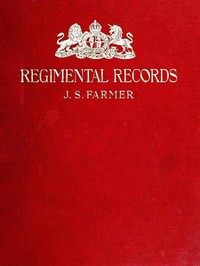
The Regimental Records of the British Army by Farmer and Farmer
Let's be clear from the start: this isn't a novel. You won't find a plot with a beginning, middle, and end. Instead, The Regimental Records of the British Army is something else entirely—a monumental reference work compiled by John Stephen Farmer and his son. Their goal was straightforward but huge: to create a definitive, organized collection of the historical records for British Army regiments.
The Story
There's no traditional story, but there is a compelling mission. In the late 1800s and early 1900s, the Farmers acted like historical detectives. They tracked down regimental archives that were often stored in damp attics or forgotten cupboards. They copied fading handwritten notes, compiled lists of officers and battles, and gathered snippets of daily life from across centuries. The 'story' is their effort to build a single, reliable source from thousands of scattered, fragile pieces. Each regiment gets its own section, a kind of biographical sketch made of facts, figures, and brief accounts of its service. Reading it is like walking through a library built specifically for soldiers, where every shelf holds the memory of a different group of men.
Why You Should Read It
You should dip into this book for the atmosphere and the human details. It's the opposite of a sweeping history textbook. The value is in the specifics—seeing the name of a young lieutenant who served in India in 1842, or the record of a regiment's movements during the Napoleonic Wars. It makes history personal and tangible. This book doesn't tell you how to feel about the Empire or warfare; it just presents the evidence. For me, that's powerful. It lets you draw your own connections. You start to see patterns, notice how long soldiers served, or how often regiments were reorganized. It turns cold data into something that hints at real lives.
Final Verdict
This is a specialist's treasure, but curious general readers can find gold here too. It's perfect for history buffs, genealogists, or anyone writing historical fiction who needs authentic military detail. It's also great for casual readers who enjoy getting lost in primary sources. Think of it less as a book to read cover-to-cover, and more as a museum you can wander through. Open it to any page, and you're immediately in the past. It's not an easy read, but it's a profoundly rewarding one if you're interested in the building blocks of history, before they get polished into a simple story.
There are no legal restrictions on this material. It serves as a testament to our shared literary heritage.
Ethan Martin
1 year agoText is crisp, making it easy to focus.
Carol Williams
11 months agoI came across this while browsing and the arguments are well-supported by credible references. Highly recommended.
Nancy Jones
1 year agoGreat read!

Betty Sanchez
1 year agoGreat digital experience compared to other versions.