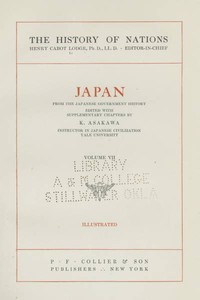
Japan: From the Japanese Government History by Kan'ichi Asakawa
Let's clear something up right away. This book is strange. The title page says it's by Kan'ichi Asakawa, a real and important Japanese historian from Yale. But the cover and catalog listing often credit 'Unknown.' It feels like you're holding a ghost book. The content itself is a formal, sweeping history of Japan, from its mythical origins up through the early 20th century. It was commissioned by the Japanese government, so it reads like an official narrative—polished, proud, and purposeful.
The Story
There isn't a plot with characters, but there is a clear narrative drive. The 'story' is the rise of Japan as a unified, modern nation. It walks you through the ancient emperors, the samurai era, the closed country period, and finally, the dramatic Meiji Restoration that thrust Japan onto the world stage. The tone is proud and explanatory, as if making a case to an international audience. It smooths over internal conflicts and presents a vision of continuous, destined progress toward becoming a great power. Reading it, you constantly sense the unspoken question: 'This is what we want you to know about us.'
Why You Should Read It
This book is fascinating because of its perspective. You're not getting a modern, critical analysis. You're getting history as a tool of national identity. It shows how a country tells its own story to shape its future. When it describes the samurai code or the decision to modernize, you can feel the pride and the intention behind the words. The mystery of the 'Unknown' author just adds to the intrigue—it makes you question every page. Is this Asakawa's work? A government edit? It turns reading into an act of detective work. You learn about Japanese history, but more importantly, you learn about the power of history itself.
Final Verdict
This isn't for someone looking for a casual, dramatic story. It's perfect for history buffs who enjoy primary sources, for anyone curious about Japan's self-image during its imperial era, or for readers who like meta-mysteries about books themselves. Think of it less as a book to learn what happened, and more as one to understand why a certain story was told. It's a unique, thought-provoking artifact that stays with you because of the questions it raises, not just the facts it provides.
This work has been identified as being free of known copyright restrictions. Share knowledge freely with the world.