1

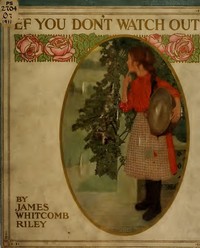
Little Orphan Annie, and Billy Miller's Circus-Show — Text and Context
3
0
Project Gutenberg
2014
Children's poetry; Conduct of life -- Juvenile poetry; Orphans -- Juvenile poetry; Circus -- Juvenile poetry; Goblins -- Juvenile poetry
Readers of public-domain and historical texts
Project Gutenberg digital edition
en
Edition facts
Words: 3,852
Reading time: 17 min
Text sections: 1
Source:
Project Gutenberg record #45239
Two poems by James Whitcomb Riley: 'Little Orphant Annie' uses dialect and a repeated warning about the 'Gobble-uns' to frame three cautionary tales, while 'Billy Miller's Circus-Show' shifts to a child's excited catalog of circus acts. The pairing contrasts domestic dread with public spectacle.
Editorial Edition Score
4.4/5
★★★★★
★★★★★
Calculated from edition completeness, EPUB availability, text structure and catalogue metadata. Not a user rating.
Edition quality
James Whitcomb Riley’s Little Orphan Annie, and Billy Miller’s Circus-Show pairs two poems that move from the flickering kitchen fire of a cautionary tale to the open-air dazzle of a traveling circus. The first poem, “Little Orphant Annie,” builds its menace through a repeated refrain—“the Gobble-uns ’ll git you / Ef you Don’t Watch Out!”—while the second, “Billy Miller’s Circus-Show,” replaces threat with delighted inventory: clowns, acrobats, and a “trained seal” that balances a ball. The volume’s structure sets a domestic scene of whispered warnings against a public spectacle of controlled wonder.
Dialect and the Sound of Warning
Riley writes “Little Orphant Annie” in a thick dialect that shapes every line: “An’ wash the cups an’ saucers up, an’ brush the crumbs away.” The spelling forces a slow, oral reading, as if the poem is meant to be spoken aloud around a hearth. Annie herself is a figure of both care and dread—she “knows riddles, rhymes and things” and tells witch-tales that end with the same warning. The dialect is not decorative; it anchors the poem in a specific voice, that of a servant child who becomes the storyteller. The repeated refrain, “Ef you Don’t Watch Out,” turns each stanza into a lesson, but the language keeps the lesson intimate, not preachy.
Three Disappearances, One Pattern
The poem’s three cautionary episodes follow a rigid structure: a child misbehaves, then vanishes. A boy who “wouldn’t say his prayers” is gone from his bed, leaving only his clothes. A girl who mocks company is snatched “through the ceilin’ ” by “two great big Black Things.” A third child who “wouldn’t mind his parents” is taken by “gobble-uns” from the chimney. Each disappearance is swift and unexplained; the poem offers no rescue or moral beyond the refrain. The repetition creates a rhythm of dread, and the details—the empty bed, the ceiling breach—are left starkly physical. Riley does not soften the endings.
The Circus as Ordered Chaos
“Billy Miller’s Circus-Show” replaces the first poem’s creeping menace with a breathless list of performers and props. The speaker, a child, catalogs “the ringmaster,” “the clown on a donkey,” “the lady that jumps through a hoop,” and “the elephants, painted and grand.” Where Annie’s tales are set in a dark house, the circus unfolds in daylight, full of “flaring flags” and “brass bands.” The poem’s energy comes from accumulation: each act is named in quick succession, as if the child can barely keep up. The shift in tone is deliberate—the same audience that shivered at goblins now laughs at clowns. The volume thus offers two modes of wonder: one fearful, one joyful.
Ethel Franklin Betts’s Illustrations
Though the excerpts do not include the illustrations, the catalog credits Ethel Franklin Betts as illustrator. Betts was known for her detailed, romantic depictions of children, often in period dress. In this volume, her images likely reinforced the contrast between the two poems: the first set in shadowy interiors, the second in the bright chaos of the circus. The original 1892 edition featured full-page plates and decorative borders. Readers should note that the Project Gutenberg text reproduces only the words; the visual pacing of the original—where an illustration might pause the narrative—is absent. Imagining the pictures can restore some of the intended rhythm.
These two poems, read together, show Riley working in two registers: the gothic and the gleeful. The first relies on a single, unforgettable warning; the second on a cascade of marvels. Neither poem explains its world—the goblins are never described, the circus never ends. That openness is the source of their lasting pull. Readers may find it useful to read the poems aloud, letting the dialect and the lists do their work.
Reader reflection
Take a moment to reflect on this book
Create a short personal record of your experience with this book.
Your progress
0
/
10
2
How did the book work for you overall?
3
How likely are you to recommend this book?
4
How much effort did this book require?
5
Did any part of the book feel personally relevant?
6
How useful did the reading feel?
7
How distinctive were its ideas or approach?
8
How strongly did the book affect you emotionally?
9
What changed or sharpened your thinking?
10