
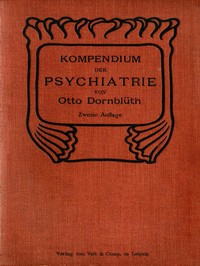
Kompendium der Psychiatrie für Studierende und Ärzte by Otto Dornblüth
Let's be clear: this is not a beach read. Kompendium der Psychiatrie is a dense, technical reference book written for medical students and practicing doctors in early 20th-century Germany. There's no protagonist, no rising action. Instead, it's a systematic catalog of mental disorders as they were understood in 1904. Dr. Dornblüth methodically works through categories like psychosis, neurosis (though he wouldn't have used that exact Freudian term yet), epilepsy-related disorders, and what was called 'degenerative' mental conditions.
The Story
The 'story' is the state of psychiatric knowledge at a pivotal moment. Sigmund Freud was publishing, but his ideas were still controversial. This book sits in that transition. It details symptoms with clinical precision: the pacing of a manic patient, the withdrawn silence of someone with melancholia, the strange physical manifestations of hysteria. The treatments prescribed—from hydrotherapy (water cures) and rest cures to isolation and various drug regimens—paint a stark picture of the era's tools. The narrative is the journey of medicine itself, trying to bring order to the chaos of the mind with the limited tools it had.
Why You Should Read It
You read this for the perspective. It's a raw, unfiltered look at the birth pangs of a modern science. It forces you to ask big questions: How do our cultural and scientific frameworks shape what we see as 'illness'? Some passages are startlingly perceptive about human behavior. Others are jarring, reflecting the biases of its time regarding gender, class, and heredity. That tension is the whole point. It doesn't just tell you what they thought; it shows you how they thought. It makes you incredibly grateful for modern medicine while also making you wonder what assumptions we hold today that will seem barbaric in 120 years.
Final Verdict
This is a niche pick, but a powerful one. It's perfect for history of science buffs, psychology students curious about their field's roots, or anyone who loves primary source material. It's not for someone looking for a narrative or an easy read. But if you've ever wondered about the real-world context behind those black-and-white photos of old sanitariums, this book is that context. Approach it not as truth, but as a historical document—a conversation with a ghost from medicine's past. It's a challenging, thought-provoking glimpse into a world trying to understand the most complex part of ourselves.
This publication is available for unrestricted use. Share knowledge freely with the world.
David Miller
6 months agoFinally found time to read this!








Daniel Johnson
1 year agoBased on the summary, I decided to read it and the author's voice is distinct and makes complex topics easy to digest. I will read more from this author.